When this is the right measure
Whenever the heat source is changing, the system around it must be re-examined — this work rides inside every heat pump project we deliver. It also stands alone: if your radiators fight to warm insulated rooms, if hot water runs out, if the cylinder dates from another era of the house, or if heating pipes run through cold voids and slabs, the system needs design attention regardless of what fuels it. And if a fabric retrofit is planned, the heating design should happen after the fabric design — emitters sized against the insulated house are smaller and cheaper than emitters sized against the leaky one.
How we do it
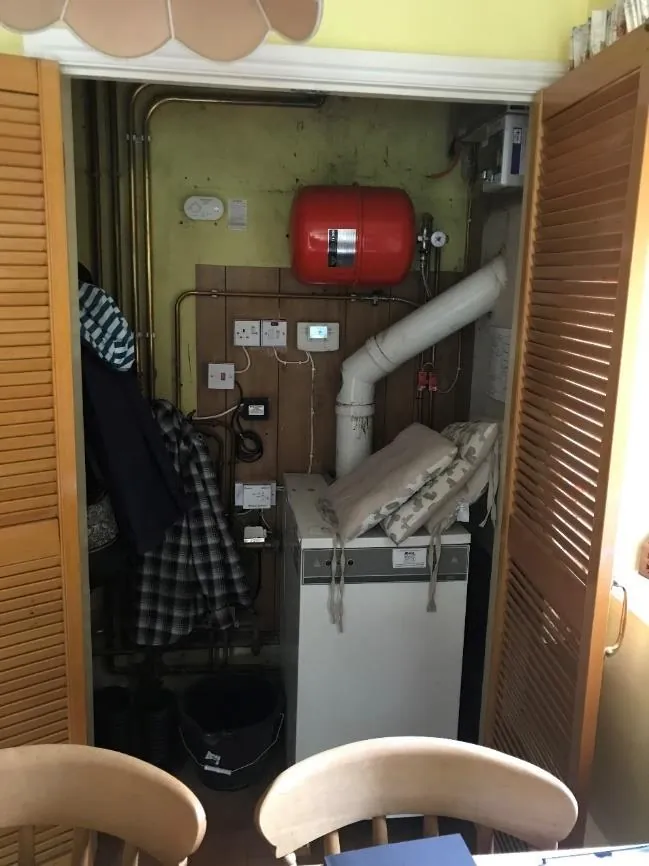
Emitters: verified room by room. We calculate each room's post-retrofit heat loss, then check the existing radiators against it at low flow temperatures. At Orchard House near Banbury, all sixteen radiators were photographed, logged and checked against low-flow-temperature output — and replaced only where they would fall short. Where floors are open anyway, underfloor heating becomes the ground-floor emitter: on Howard Street in East Oxford the finished system runs UFH downstairs and radiators upstairs.
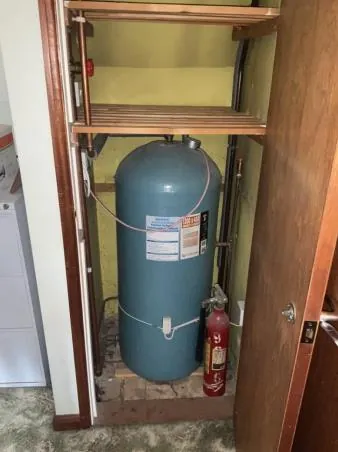
Cylinders: sized for stored heat. Low-temperature systems live on storage. At Orchard House the old 162-litre cylinder left with the oil boiler; in its place came substantially larger insulated hot-water storage — an approximately 300-litre cylinder referenced at design stage — with filtration, antifreeze protection and flow measurement specified alongside.
Distribution: insulated, and routed to the rooms. Pipework is the invisible loss. At Orchard House the old runs passed through the uninsulated slab — the heating was warming the earth. Channels were excavated across the floor, new insulated runs laid and re-buried, and the conservatory's existing wet underfloor heating connected into the new system. New pipework on our projects is insulated as standard; heat travels to rooms, not voids.
Controls: zoned, compensated, explained. Room-by-room zoning and weather compensation were designed into the Howard Street system — the post-works certificate rates the heat pump and its zone control "very good". Every system is commissioned and walked through with the owners at handover.
Old plant out, properly. Oil tanks, redundant boilers and capped gas feeds are decommissioned as part of the package — at St Swithun's annexe in Kennington the old gas boiler was decommissioned and its feed capped, with heating and cooling provided instead by an air-to-air heat pump and hot water by an instantaneous water heater, matched to how the space is actually used.
What it pairs with
Heating and hot water design pairs with heat pumps (the source it serves), floor insulation and UFH (the emitter opportunity), rewiring and electrical (dedicated supplies and controls wiring) and the fabric measures that shrink the load in the first place — see whole-house retrofit.
Proof
At Orchard House near Banbury, the full wet-side rebuild — sixteen emitters verified, cylinder upsized, distribution excavated and re-laid insulated, modern controls — carried a 1970 stone house from oil to a register-verified EPC B in December 2023. Read the full case study.
Questions we're asked
Do radiators need replacing for low-temperature heating?
Only some of them — and we find out which by checking, not guessing. At Orchard House all sixteen existing radiators were photographed, logged and verified against low-flow-temperature output; only those that would fall short were replaced. Wholesale radiator swaps are a sign the design work was skipped.
Why do heat pumps need bigger hot water cylinders?
Low-temperature systems reheat water more gently, so they store more of it. At Orchard House the old 162-litre cylinder came out and substantially larger insulated storage went in — an approximately 300-litre cylinder was referenced at design stage — sized for the household, not the boiler it replaced.
What are zoned controls and weather compensation?
Zoning heats rooms individually instead of the whole house at once; weather compensation adjusts the water temperature against outside conditions so the system runs no hotter than the day requires. On Howard Street the heat pump system was designed with room-by-room zoned controls and weather compensation, and the register rates its heating and controls 'very good'.
Is it worth insulating heating pipework?
It is essential — uninsulated pipes heat voids and slabs instead of rooms. At Orchard House the old distribution pipework ran through the uninsulated floor slab, effectively warming the ground; we excavated channels, laid new insulated runs and re-buried them, so the heat now arrives where it is paid for.